The mill and the canal beside the concert church
Great Mill and Radunia Canal
The Great Mill and the Radunia Canal beside St Catherine's Church in Gdańsk: how the canal was dug, what the mill was and what it is now.
Reserve a seat for Chopin ↗A canal dug for mills
English Wikipedia says the Radunia Canal was completed in 1356 and links the Radunia and Motława rivers. It was dug between 1348 and 1356 by the Teutonic Knights, who ruled Gdańsk then, and it had two purposes: powering the mills along its path and bringing drinking water to the city. In the Old Town it flows through two mills, the Little Mill and the Great Mill, before it joins the Motława. From 1539 to 1852 a pumping station that brought drinking water from Jasień Lake stood on the canal's shores.
The Great Mill
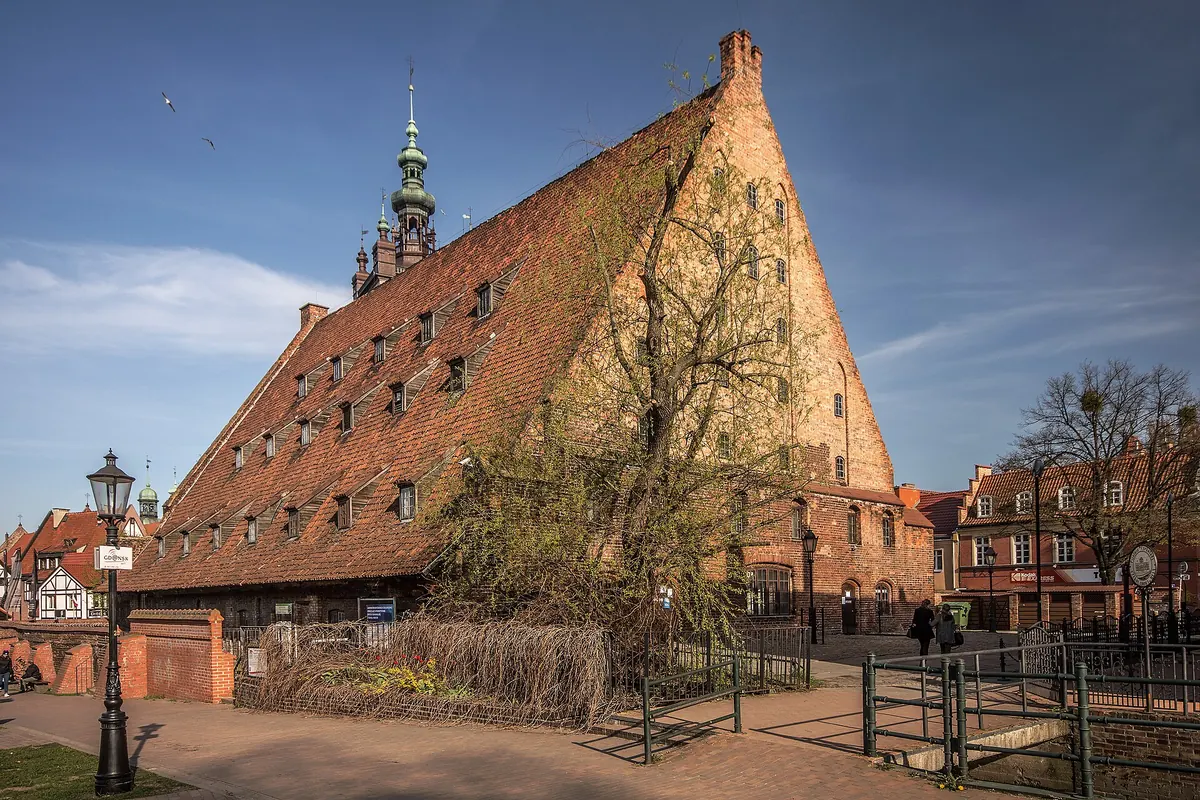
English Wikipedia describes the Great Mill as a 14th-century watermill in the Old Town, powered by the Radunia Canal and built by the Teutonic Order in 1350 on a newly created artificial island. It measures 26 metres in height, 26 in width and 41 in length, and 18 water wheels drove it. It worked as a watermill, a granary and a bakery, and the article on the canal calls it Europe's largest industrial plant of the Middle Ages.
After 1945
The mill produced flour until it was destroyed during the siege of Danzig in 1945. English Wikipedia says it was renovated after 1962, with about 80 percent of the structure original, and became a multi-purpose building and later a shopping mall until 2016. In December 2016 it passed to the Amber Museum, and after a renovation that began in late 2018 the museum opened there on 24 July 2021.
The canal today
A project to modernise the Radunia Canal began in 2011, with shore protection, stronger flood embankments and rebuilt pedestrian bridges, and it was completed in 2015. During the flood of 9 July 2001 the canal overflowed and flooded parts of the city centre. For a visitor, the result is a managed waterway with footbridges, running through the Old Town and past the mill before it meets the Motława.
Church and mill together
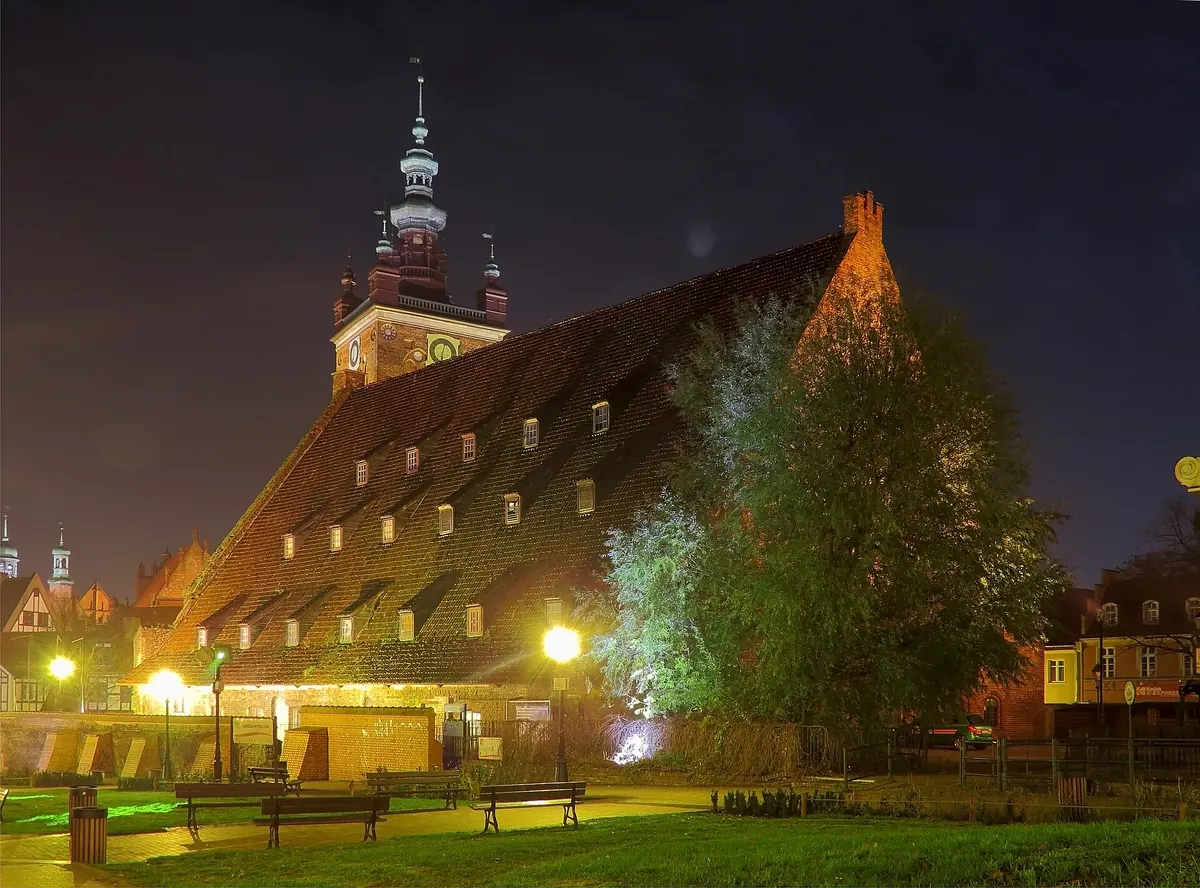
A photo caption on the Polish history site dzieje.pl speaks of the historic Great Mill next to St Catherine's Church, and both stand in the Old Town. In photographs the tower rises behind the mill's huge roof. For a concert visitor, it means the walk to the church passes one of the largest medieval buildings in the city.
The street and the meeting point
The meeting point on the concert ticket is Wielkie Młyny 7, and Wielkie Młyny is the name of the street beside the mill. Other ticket sellers give St Catherine's address as Profesorska 3. Both belong to the same corner of the Old Town, and your confirmation names the entrance. If you arrive early, the canal bank is an easy place to wait.
Gdańsk around it
English Wikipedia describes Gdańsk as a Baltic port that joined the Hanseatic League in 1358 and was the principal seaport of the Polish Crown until the early 18th century. The Old Town, with its canal and mills, belongs to that trading past. The activity list beneath the booking calendar shows other evenings to book in the city, and the concert can be the anchor of your night.
Read next: St Catherine's Church, Gdańsk
Frequently asked questions
What is the Great Mill now?
English Wikipedia says it has housed an amber museum since 2021.
Who built the Radunia Canal?
The Teutonic Knights, between 1348 and 1356, to power mills and supply drinking water.
Is the mill next to the church?
Yes. Both stand in the Old Town and photographs show the church tower behind the mill's roof.
Sources